
Contents
Someone replies to your post with just a skull emoji and you cannot tell if you offended them or made them laugh. Here is the fast answer: the skull means they are dying of laughter, not anything grim. Most popular emojis on X carry a meaning that has drifted far from the literal picture, and reading them wrong is how you misjudge a whole conversation.
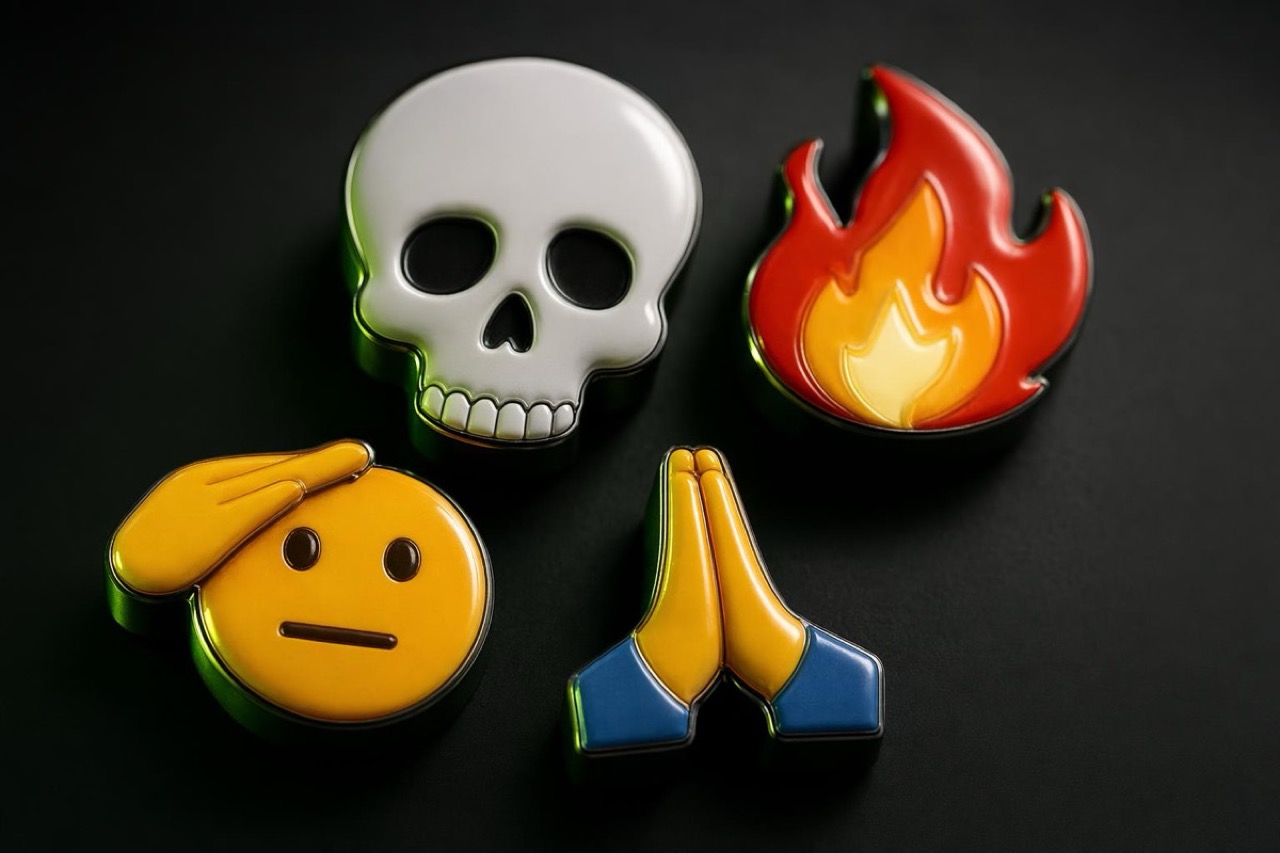
This emoji meanings guide covers the emojis people actually use on X every day, the skull, the loudly crying face, the salute, the cap, the fire, the folded hands, and more. For the two biggest families, colored hearts and smiley faces, we go deep in their own guides linked below, and this post is the hub that ties the whole emoji vocabulary together.
Emoji meanings guide: the quick answer
Here is the cheat sheet for the emojis you will see most on X, with what they actually signal:
| Emoji | What it really means |
|---|---|
| 💀 Skull | "I'm dead," dying of laughter |
| 😭 Loudly crying | Laughing so hard you cry (usually), or real tears |
| 🫡 Salute | Respect and loyalty, or reluctant "fine, I'll do it" |
| 🧢 Cap | A lie; "no cap" means no lie, for real |
| 🔥 Fire | Excellent, impressive, hot |
| 🙏 Folded hands | Please, thank you, gratitude, or prayer |
| 🥀 Wilted rose | Heartbreak, melancholy, an edgy sad mood |
| 👀 Eyes | Watching this, intrigued, or lightly suspicious |
| 🙃 Upside-down face | Sarcasm, awkwardness, "this is fine" |
| 🤡 Clown | Someone (often yourself) being a fool |
The rest of this post explains the intent behind each so you can read and reply without second-guessing.
The laughing emojis: skull, loudly crying, and the fading 😂
Online humor has its own punctuation, and these three carry it.
Skull (💀). The skull rarely means death. It means "I'm dead," shorthand for something so funny you cannot cope. You drop it under a joke, a chaotic screenshot, or a savage reply. It became the default laugh emoji for younger users who now read the classic tears-of-joy face as something their parents use.
Loudly crying (😭). This one is context-dependent. Under a funny post it means laughing until you cry, not sadness. Under bad news it means genuine tears. And under a wholesome video or a cute pet, it means you are overwhelmed in a happy, emotional way. Same emoji, three different feelings, all decided by what it sits next to.
Tears of joy (😂). Still everywhere, but it carries an age signal now. Plenty of people use it sincerely, but in very online spaces it reads as slightly dated compared to the skull. Not wrong, just a tell about which generation is typing.
Respect, lies, and hype: salute, cap, and fire
Salute (🫡). The salute shows respect, acknowledgment, or loyalty, a quick "yes sir" or the classic "o7" gesture people type to honor someone. It also has an ironic second life: reluctant, resigned acceptance of an annoying task. "Guess I'll do it 🫡" means you are not thrilled but you are doing it anyway. The words around it tell you whether it is sincere or deadpan.
Cap (🧢). Cap means a lie. Calling a claim "cap" means you think it is false or exaggerated. The flip, "no cap," means no lie, I am being straight with you. It comes from Black slang where "capping" is lying or boasting, and the baseball-cap emoji became the visual stand-in. So "that's cap 🧢" is calling something out, and "no cap 🧢" is swearing it is true.
Fire (🔥). One of the most universal approval emojis online. Fire means excellent, impressive, or hot in the figurative sense. A fire tweet, a fire fit, a fire track. Stack a few and it is pure hype. It needs no words, which is why it is the fastest way to co-sign a great post.
Feelings and mood: folded hands, wilted rose, and eyes
Folded hands (🙏). This one sparks endless debate over whether it is praying hands or a high five. In practice it means please, thank you, gratitude, or hope. "🙏 appreciate you" is thanks; "🙏 please let this work" is a plea. It is warm and sincere, one of the safest emojis to send in almost any context.
Wilted rose (🥀). The dying rose carries heartbreak, loss, and melancholy. It shows up around sad-boy posts, breakup lyrics, and moody aesthetics. It can be genuinely emotional or ironically dramatic, the emoji equivalent of a sad rap ad-lib. Either way it sets a somber, poetic tone.
Eyes (👀). The side-eyeing pair means "I am watching this," intrigued, nosy, or mildly suspicious. Drop it under a spicy screenshot to say "go on," or on a teased announcement to say "I am paying attention." It signals interest and a hint of gossip without committing to an opinion.
Sarcasm and self-roast: upside-down face and clown
Upside-down face (🙃). Rarely literal silliness. It usually flags sarcasm, awkwardness, or masking discomfort, the "this is fine while everything burns" energy. "Great, another meeting 🙃" is not happy. It softens a complaint into a joke while making the real feeling clear.
Clown (🤡). The clown calls out foolishness, most often your own. "Believed him again 🤡" is self-roast. Pointed at someone else it is an insult, so it can read as mocking. Used on yourself it is relatable and disarming, which is why self-deprecating posters lean on it.
Emojis change the whole tone, not just decorate
Every emoji above shifts the meaning of the words around it. The same sentence lands as sincere, sarcastic, or savage depending on the little picture you attach. That is why emoji fluency is really tone fluency, and it is worth getting right whether you are joking with friends or writing to a customer.
Two families deserve their own deep dives because color and expression carry so much nuance. Colored hearts each send a different emotional signal, and our heart emoji meanings guide breaks down red versus yellow versus black versus purple. Smiley faces are just as loaded, where a warm grin and a passive-aggressive one look almost identical, and our smiley face emoji meanings guide decodes each one. Together with this hub, they cover the emoji vocabulary you need to read X clearly. Knowing what DM means rounds out the same private-messaging literacy.
Frequently asked questions
What does the skull emoji mean?
The skull emoji almost never means death online. It means you are dying of laughter, as in "I'm dead." People drop it under a joke or a wild take to say something is so funny they cannot handle it. It largely replaced the crying-laughing face for younger users who find that one dated.
What does the loudly crying emoji mean when someone isn't sad?
The loudly crying face is mostly used for laughing so hard you cry, not genuine sadness. Context decides: under a funny post it means hysterical laughter, while under bad news it means real tears. It also signals being overwhelmed by cuteness or emotion, like a wholesome edit that makes you sob happily.
What does the salute emoji mean?
The salute emoji shows respect, acknowledgment, or loyalty, like a quick "yes sir" or "o7" nod to someone. It also carries an ironic, resigned meaning: reluctantly accepting an annoying task, as in "guess I'll do it." Tone in the surrounding message tells you which one is meant.
What does the cap emoji mean?
The cap emoji means a lie or lying. Saying something is "cap" means you think it is false. The reverse, "no cap," means no lie, for real, I am being honest. It comes from Black slang where capping means exaggerating or lying, and the baseball-cap emoji became its shorthand.
What does the fire emoji mean on X?
The fire emoji means something is excellent, impressive, or hot in the figurative sense. A fire tweet, fire outfit, or fire track is exceptional. It is one of the most universal approval emojis online, used to hype up posts, looks, music, and takes without needing any words.
Read the room, then reply
The through-line of this emoji meanings guide is simple: popular emojis mean far more than the picture. Skull is laughter, cap is a lie, salute is respect or resignation, fire is approval, and the loudly crying face flips between joy and tears on context alone. Learn the intent and you stop misreading conversations.
That same read-the-room instinct is what makes outreach on X actually work. XAutoDM paces and personalizes your X cold DMs so they land warm and human in the inbox, follows up automatically until someone replies, and tracks every conversation to a booked call. Start on the free plan, 1 account, no card required.





Your next customer is already on X.
Find the people talking about what you sell, message them on a safe schedule, and turn the replies into booked calls.
- Scrape leads from any tweet, keyword or X List
- Auto-DM new followers and people who engage
- Follow-ups that stop the moment someone replies
- Safe daily limits and warm-up, built in
- Every reply tracked through to a booked call
Free Test plan · no credit card.
Related posts

Ready to automate your Twitter DMs?
Start sending personalized DM campaigns to your target audience today. Get higher response rates and more leads than cold emails.