

Contents
We've all read those breathless tech articles claiming AI will transform everything overnight. As someone who's spent 15 years implementing automation systems, I can tell you the reality is messier – but still fascinating. Last month, I visited a manufacturing plant where AI-powered robots work alongside humans, and the shift manager's perspective changed mine completely.
Understanding AI Automation
What is AI Automation?
Traditional automation is like my grandfather's old record player – it plays the same song exactly the same way every time. AI automation is more like my teenager's garage band – it learns, adapts, and sometimes surprises you (for better or worse). Real AI systems don't just follow instructions; they develop their own approaches based on what works.
Key Technologies Powering AI Automation
During my consulting work, I've seen four technologies make the biggest impact:
Machine Learning reminds me of training my stubborn beagle – it gets better with practice and feedback. My client's customer churn prediction model was garbage until they fed it three years of historical data. Now it's scary accurate.
Natural Language Processing has come miles from the clunky chatbots of 2018. Yesterday I called my bank and genuinely couldn't tell if "Jennifer" was human or AI until I asked a deliberately complex question.
Examples of AI Automation in Action
My brother-in-law's manufacturing company struggled until they automated quality control. Now their defect rate is down 78%. My favorite coffee shop uses AI to predict busy periods and staff accordingly – the owner said it saved them during post-pandemic labor shortages.
Speaking of practical applications, I recently discovered xAutoDM while researching for this article – they've created an impressive automated messaging platform that's helping businesses streamline customer communications. Their system demonstrates exactly how AI can take over repetitive tasks while actually improving the customer experience.
The Benefits of AI Automation
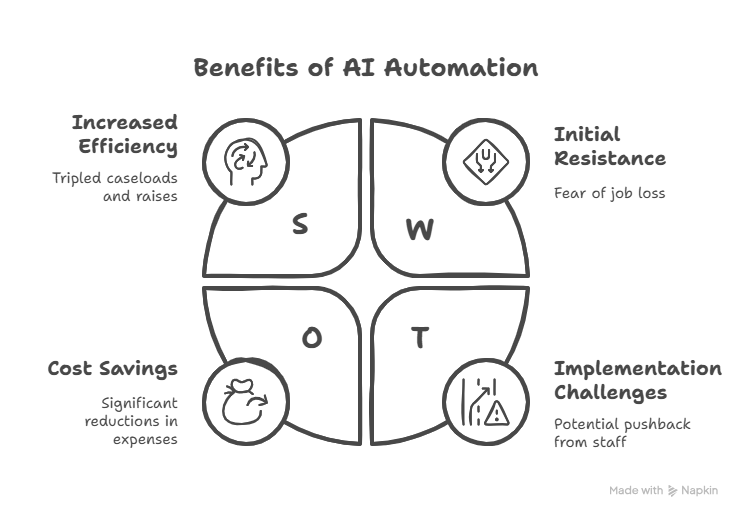
Increased Efficiency and Productivity
When I helped implement document automation at a law firm, their paralegals initially feared for their jobs. Six months later, they were handling triple the caseload and had received raises. "I'm not doing mindless work anymore," one told me. "I'm actually using my brain."
Cost Reduction and ROI
Numbers don't lie, and I've seen some impressive ones. A regional hospital cut billing processing costs by 62% while reducing errors by 37%. My cousin's e-commerce business automated inventory management and eliminated $43,000 in annual overstocking costs – huge for a small operations.
Improved Accuracy and Reduced Errors
After three heart surgeries, accuracy matters deeply to me. The cardiac monitoring system my doctor uses flags potential issues that might be missed during a standard 15-minute appointment. It caught my irregular heartbeat pattern last summer before it became dangerous.
The Challenges and Limitations of AI Automation
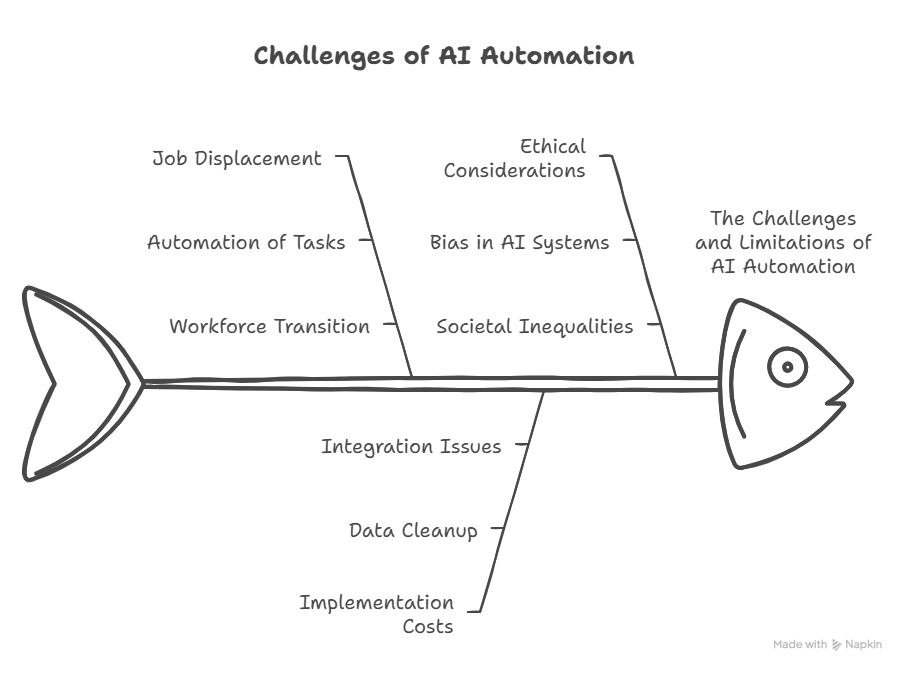
Job Displacement and the Changing Workforce
Let's be brutally honest – some jobs are disappearing. My nephew lost his data entry position last year when his company automated. The "just learn to code" advice didn't help this 54-year-old with dyslexia. He's delivering packages now and making 40% less. These stories don't make tech conference keynotes, but they're real.
Implementation Costs and Complexity
During a disastrous project in 2021, I watched a retail chain burn through $1.2 million trying to implement inventory AI. The CFO had budgeted $300K. They didn't account for data cleanup, integration nightmares, and staff resistance. They pulled the plug after 9 months with nothing to show.
Ethical Considerations and Bias
This keeps me up at night. A healthcare client's diagnostic system was recommending fewer advanced tests for patients from certain zip codes. Nothing in the coding explicitly created this bias – it simply learned from historical patterns that reflected deeper societal inequalities. Fixing it required major intervention.
Real-World Examples: Successes and Failures
Success Stories: Companies Thriving with AI
My friend Lisa's marketing agency was drowning in content demands until they implemented AI assistance. "We're producing 3x the content with the same team, and they're less burned out," she told me over lunch last week. Their client retention has improved 40%.
The local grocery chain I shop at reduced food waste by 32% using AI to predict purchasing patterns. Their produce manager told me it's changed how they order everything.
Failure Stories: Learning from Mistakes
Not every story ends well. I consulted for a mid-sized bank that rushed AI implementation for loan approvals. Within three months, they faced regulatory scrutiny for potentially discriminatory outcomes. The system worked exactly as designed – the problem was in how humans designed it.
A manufacturing client spent $800K on predictive maintenance AI that generated so many false alarms that floor managers started ignoring it entirely. Sometimes the old ways win – their most reliable machine assessment still comes from Ron, a 30-year veteran who can "hear when something's not right."
Is AI Automation Right for Your Business?
Assessing Your Business Needs and Goals
Start by walking your actual operation floor. Where do people look frustrated? What tasks make your best employees groan? During my warehouse consultation last month, I noticed three people manually checking inventory counts. They hated it, made mistakes when tired, and could have been doing more valuable work.
Key Considerations Before Implementation
For God's sake, audit your data before starting. My worst consulting nightmare involved a company with 15 years of inconsistently formatted customer records. Garbage in, garbage out isn't just a saying – it's a painful lesson I've seen businesses learn repeatedly.
Ask uncomfortable questions about who might be harmed or helped by automation. When my daughter's school automated attendance, it flagged "excessive absences" for a child receiving cancer treatment. Systems need human oversight and compassion.
Step-by-Step Guide to Implementing AI Automation
Begin with honest assessment and manageable pilot projects. My most successful client started by automating just their accounts payable approval process. After proving the concept, they expanded methodically. Progress tracking is crucial – I recommend weekly stand-ups with stakeholders to address issues immediately.
Wrapping Up
AI automation isn't magic – it's a tool that dramatically amplifies both your strengths and weaknesses. When implemented thoughtfully, it genuinely can deliver game-changing efficiency and accuracy. But the journey involves real challenges that glossy vendor presentations won't mention.
Is it worth the hype? Sometimes yes, sometimes no. My decades in this field have taught me that success depends more on organizational readiness and clear-eyed planning than on the technology itself.
FAQs
How much does AI automation typically cost for small businesses? While costs vary widely, small businesses can expect to invest $5,000-$50,000 for basic AI automation solutions. Platforms like xAutoDM.com offer subscription models starting much lower, making automation more accessible.
What jobs are most likely to be replaced by AI automation in the next 5 years? Roles involving repetitive tasks face the highest automation risk, including data entry, basic accounting, routine customer service, and certain manufacturing positions.
How long does it take to implement AI automation in a typical business process? Implementation timelines range from 1-2 weeks for simple solutions like automated messaging (such as xAutoDM.com) to 6-18 months for complex enterprise-wide systems. The biggest factors affecting timeline are data quality, integration requirements, and organizational readiness.
What's the difference between RPA (Robotic Process Automation) and AI automation? RPA follows rigid, predetermined rules to automate specific tasks, like a macro on steroids. It's excellent for consistent, rule-based processes but can't handle exceptions well.





Your next customer is already on X.
Find the people talking about what you sell, message them on a safe schedule, and turn the replies into booked calls.
- Scrape leads from any tweet, keyword or X List
- Auto-DM new followers and people who engage
- Follow-ups that stop the moment someone replies
- Safe daily limits and warm-up, built in
- Every reply tracked through to a booked call
Free Test plan · no credit card.
Related posts



Ready to automate your Twitter DMs?
Start sending personalized DM campaigns to your target audience today. Get higher response rates and more leads than cold emails.