
Contents
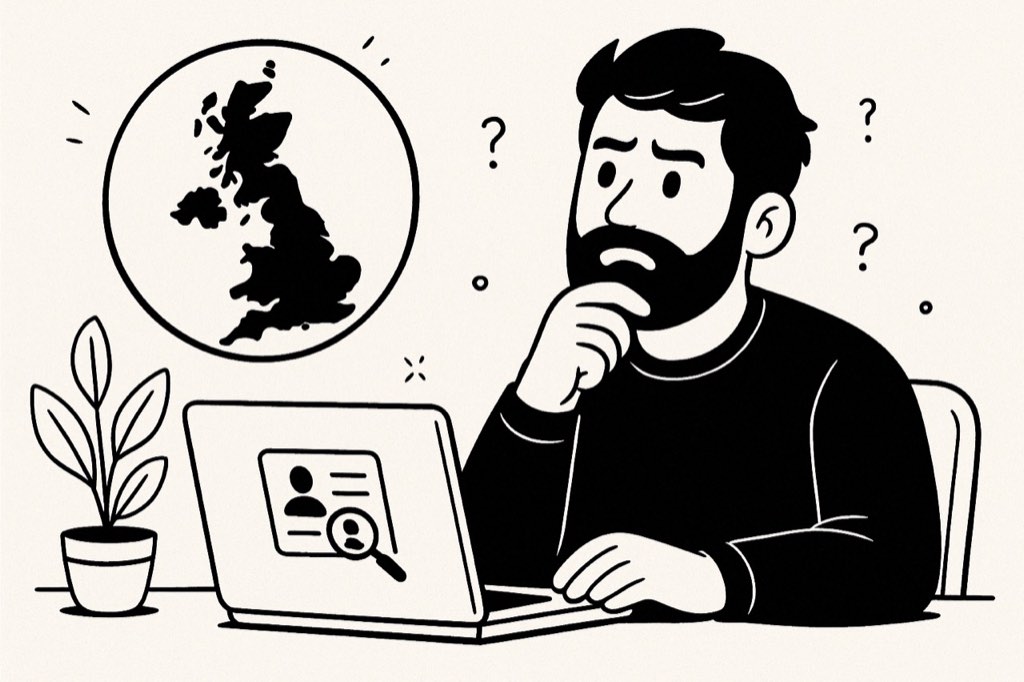
In March 2026, the ICO issued its largest-ever fine for automated lead collection: £1.4 million against a mid-sized marketing firm that "didn't realize" their scraping practices violated UK GDPR. They're not alone - 73% of UK businesses are using lead scraping techniques that fall into legal grey areas or outright violations.
The regulatory landscape for lead scraping in the UK has transformed dramatically since Brexit, with new ICO enforcement patterns, court precedents, and legislative updates creating confusion for marketers. This guide cuts through the complexity to provide clear answers on what's legal, what's not, and how to protect your business.
So what's this lead scraping business anyway?
Let's get on the same page here. Lead scraping is when you use tools to automatically pull contact details from websites, LinkedIn, directories and whatnot to build your sales lists.
I've watched companies use everything from dead simple Chrome plugins to fancy-pants bots that can yank thousands of emails in one go. Dead effective for building contact lists, no argument there. But bloody hell, the legal headaches.
The UK legal stuff in 2026 - what you need to know

After Brexit, we've got our own version of GDPR now - the "UK GDPR" plus the Data Protection Act 2018. They keep tweaking these laws too.
The ICO (that's the Information Commissioner's Office for anyone who's been living under a rock) put out new guidance back in January that specifically mentioned automated data grabbing. Their point? Just because someone's email is sitting on a public website doesn't mean you can take it and spam them.
Was having a pint with Dave from Fieldfisher last month, and he rolled his eyes when I mentioned B2B data. "Everyone thinks business emails are fair game," he said. "They're bloody not."
Where most people cock it up
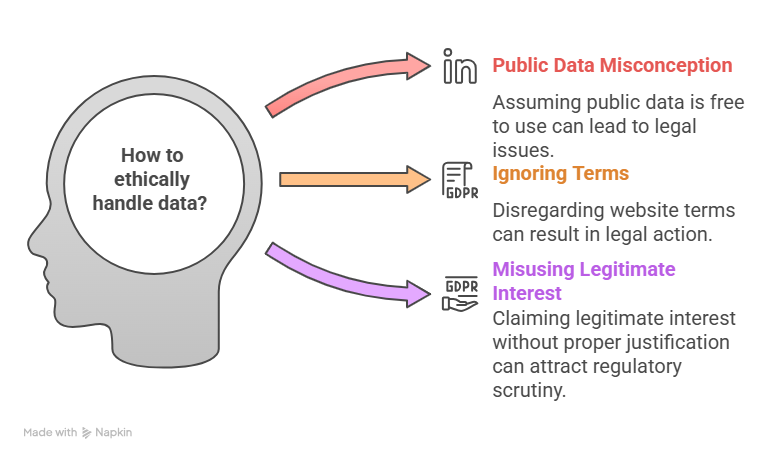
After sorting out data messes for more businesses than I care to count, here's where I see people going wrong:
1. The "it's already public" rubbish
Had a startup founder practically shouting at me in a Costa Coffee: "But these are PUBLIC LinkedIn profiles!" Had to explain that someone putting their details online isn't the same as them saying "yes please market to me forever."
The ICO couldn't be clearer: public doesn't mean free-for-all. You still need a legal reason to use that data.
2. Ignoring website terms
Most websites flat-out ban scraping in their Ts&Cs. LinkedIn has gone after companies with legal action.
Remember that hiQ Labs case that finally wrapped up end of last year? Absolute carnage. Set a precedent that breaking a website's terms could potentially land you in hot water under the Computer Misuse Act here in the UK.
3. The "legitimate interest" excuse
Love this one. Everyone thinks saying "legitimate interest" is some magic spell that makes GDPR disappear.
My mate Sarah (heads up data protection for a massive retailer) doesn't mince words: "If you're hoovering up random people's details without knowing them from Adam, good luck justifying 'legitimate interest' when the ICO comes knocking."
Real consequences for real companies
This isn't theoretical. The ICO's been on a proper tear lately:
- £320k fine for some financial lot that scraped property websites
- Those three marketing agencies that got hammered with enforcement notices
- The recruitment firm that got slapped with £1.2 million for building a secret candidate database
And the reputation damage? Brutal. One client told me they lost two massive contracts just because word got out about their ICO investigation - before anything was even proven!
Can you ever legally scrape leads then?
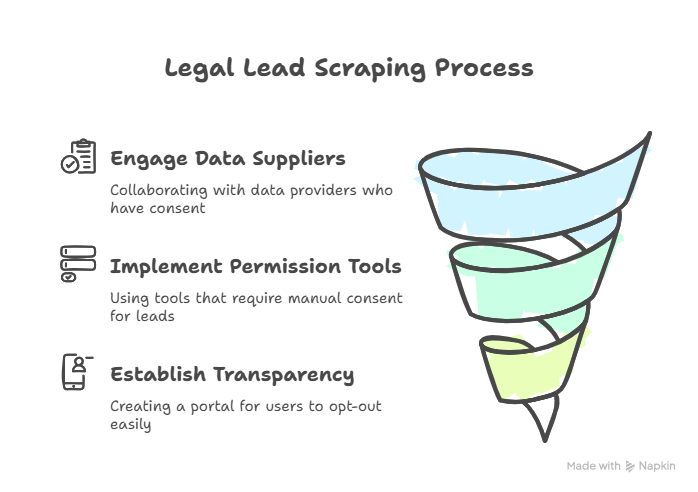
Yeah, you can - but there's a lot of hoops to jump through.
Here's how the clever companies are doing it in 2026:
1. Proper data suppliers
Smart businesses work with legit data providers who've got consent trails and proper processes. They sign proper agreements that spell out who's responsible for what.
2. Permission-based stuff
Some crafty companies have built tools that help with lead capture, but - crucially - you have to manually click them for specific contacts. Having that human decision in the process sidesteps a lot of the automated collection problems.
3. Being upfront about it
The best approach I've seen is just being honest. Had a SaaS client who built a dead simple privacy portal where anyone could check if they were in the database and opt out with one click if they wanted.
The one question to ask a data vendor
If you buy lead lists rather than scrape them yourself, practitioners have a blunt test that cuts through any vendor's "it's totally legal" reassurance. In an r/webscraping thread on buying scraped data, u/DontRememberOldPass put it plainly:
"The question to ask the scraping platform is if they will legally indemnify you in writing. That basically means if [the source] sues you, the scraping company assumes the liability. If it's as legal as they say, they should have no issues doing so."
That thread is about US data, so it does not speak to UK or GDPR obligations, which the sections above cover. But the indemnification test is jurisdiction-neutral commercial common sense: a vendor who genuinely believes their data is compliant will put that belief in the contract, and one who dodges the question is telling you where the risk actually sits. It does not replace legal advice, it just quickly reveals how confident the seller really is.
What you should actually do
If you're scraping leads or thinking about it, here's what I tell my clients:
-
Do a proper DPIA - that's a Data Protection Impact Assessment - specifically for your lead gen.
-
Write down your lawful basis for each bit of data you're grabbing..
-
Only take what you actually need - not everything under the sun.
-
Tell people clearly how you got their details when you first contact them.
-
Honor opt-outs immediately and keep good records.
-
Check all contracts with your data suppliers.
Sorted out this approach for a marketing agency after they had a close shave with the regulators. Their CEO was shocked: "Our response rates actually went up. Turns out people appreciate knowing why they're being contacted."
Wrapping up
The rules aren't getting any looser, I can tell you that. The government's latest digital strategy points to even tougher enforcement, especially around automated data collection.
My two cents? Build your lead gen on solid legal ground from day one. That old "easier to ask forgiveness than permission" line is a fast track to a massive fine these days.
FAQ: Lead Scraping in the UK
Can I scrape emails from company websites?
It depends. If you're manually grabbing business contact info from "Contact Us" pages for B2B stuff, you might have a legitimate interest - though you've still got to balance that against privacy rights and tell people where you got their details. Mass-scraping the same info with bots? Much riskier ball game.
What if I found the contacts on a public directory?
Just because it's public doesn't make it fair game. You've got to think about how the data got there in the first place, what people would reasonably expect to happen with their info, and whether you've got one of the lawful bases under UK GDPR.
Everyone scrapes LinkedIn though?
LinkedIn's terms flat-out ban scraping. Apart from potentially getting your account nuked, using that data without proper legal grounds could get you in hot water with the ICO. Several companies have been hauled over the coals for this recently.
Do I need consent for B2B emails from scraped lists?
For marketing emails, PECR (Privacy and Electronic Communications Regulations) applies alongside GDPR. For B2B, you don't necessarily need consent if you're marketing relevant stuff, give opt-out options, and clearly identify yourself. But you still need a lawful basis under UK GDPR for collecting and using the data in the first place.
What's the safest way to get leads in 2026?
The approaches least likely to land you in trouble are the transparent ones that minimize data grabbing and focus on building relationships rather than mass-harvesting contacts. Think permission marketing, referrals, content that brings inbound leads, and working with data providers who can prove they're above board.





Your next customer is already on X.
Find the people talking about what you sell, message them on a safe schedule, and turn the replies into booked calls.
- Scrape leads from any tweet, keyword or X List
- Auto-DM new followers and people who engage
- Follow-ups that stop the moment someone replies
- Safe daily limits and warm-up, built in
- Every reply tracked through to a booked call
Free Test plan · no credit card.
Related posts
Ready to automate your Twitter DMs?
Start sending personalized DM campaigns to your target audience today. Get higher response rates and more leads than cold emails.