
Contents
Wondering if your web scraping activities might land you in legal hot water? You're not alone. As businesses hunt for fresh leads, web scraping has become an increasingly popular—yet legally ambiguous—method for gathering contact information. The line between legitimate data collection and potential legal violations isn't always clear.
Before deploying that scraping tool, it's crucial to understand the complex legal landscape surrounding this practice and how to protect your business while still gathering valuable leads.
What the heck is web scraping anyway?
Before my little legal adventure, I didn't really understand what web scraping meant either.
Basically, it's using software tools to automatically collect info from websites. Instead of manually copying and pasting contact details from a hundred company "About Us" pages (kill me now), you set up a program to do it automatically.
Sounds brilliant, right? That's what I thought too.
The tech guys on my team whipped up a simple scraper in Python. It visited thousands of company websites overnight and pulled names, job titles, email formats, and phone numbers – basically our dream lead list handed to us on a digital platter.
For about six weeks, our sales team was in heaven. Then the cease and desist letter arrived.
The legal mess nobody warned me about
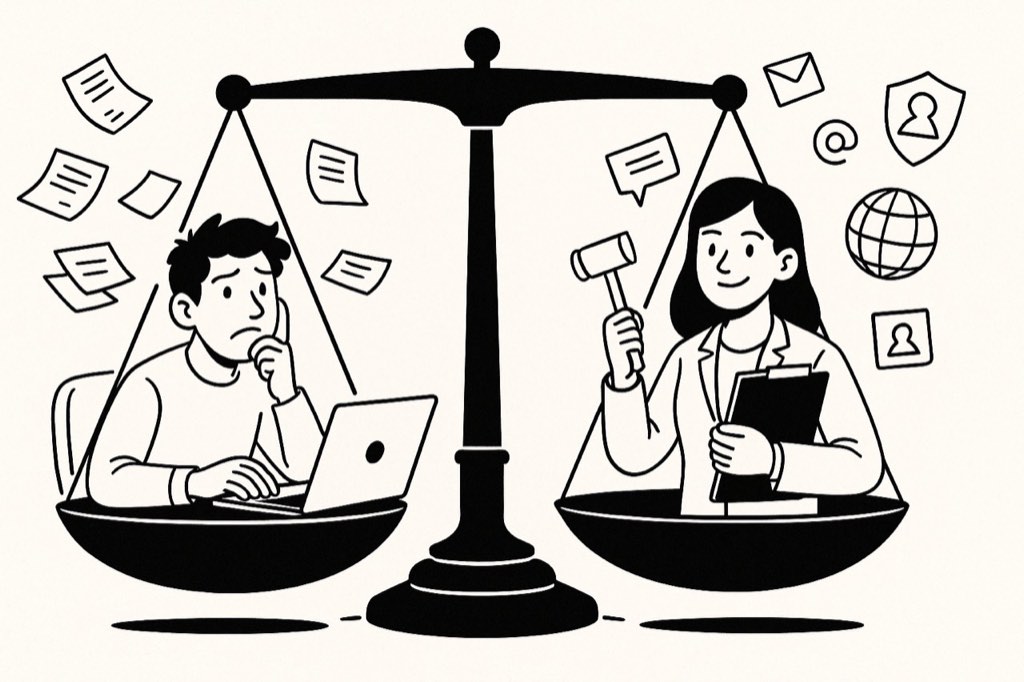
Turns out, web scraping lives in this weird legal gray zone where nobody – not even the courts – can totally agree on what's allowed.
When I frantically called our company lawyer (sorry for the weekend panic, Dave), he broke it down for me like this:
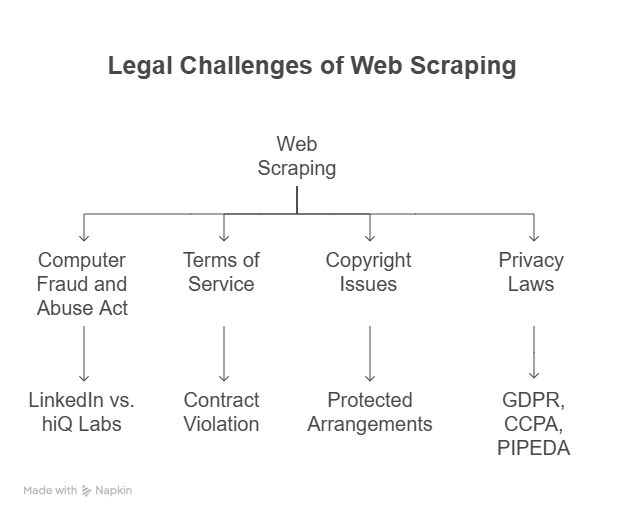
Computer Fraud and Abuse Act
This ancient law from 1986 wasn't written with web scraping in mind, but it prohibits accessing computers "without authorization." Courts have gone back and forth about whether scraping counts.
Dave pointed me to the LinkedIn vs. hiQ Labs case. LinkedIn tried stopping hiQ from scraping public profiles, and the courts basically played tennis with the decision. First ruling it was OK, then not OK, then maybe OK again. Not exactly clear guidance.
Terms of Service BS
You know how you click "I agree" without reading 50 pages of legal jargon? Yeah, me too. Big mistake.
Most websites explicitly forbid automated scraping in those terms. We were technically agreeing not to scrape, then doing it anyway – which is basically a contract violation.
One site we scraped had this buried on page 12 of their terms: "Any automated collection of data from this website is strictly prohibited." Oops.
Copyright headaches
Websites and their content are protected by copyright law. While basic facts (like a company's phone number) aren't copyrightable, creative arrangements of information might be.
We thought we were being clever by only taking "factual" information, but the arrangement and selection of that information on some sites was apparently protected. Who knew?
Privacy laws (this is where we really stepped in it)
GDPR, CCPA, PIPEDA... the alphabet soup of privacy laws was our biggest problem.
Turns out, you can't just collect people's contact info without their consent. Even business emails count as personal data in many places! And different regions have different rules:
- Europe's GDPR requires explicit consent before collecting personal data
- California's CCPA gives people the right to know who has their info and why
- Canada's PIPEDA has its own set of requirements
Our scraper was happily grabbing data from all these jurisdictions without any regard for these laws. We were basically building a non-compliant database by the minute.
What I learned about when scraping MIGHT be OK
After our legal scare, I spent way too many hours researching this topic. Here's what I learned about potentially safer scraping:
- Public data without login requirements is slightly safer, but still not risk-free. Courts seem less bothered when you're not breaking through security measures.
- Check for robots.txt files! Most websites have this file that tells scrapers which pages are off-limits. Ignoring it is basically announcing "I know I shouldn't be doing this!"
We never even checked these files. Rookie mistake. - Don't hammer the servers. Our scraper was sending requests super fast, which probably helped get us caught. If your scraping noticeably affects a website's performance, expect trouble.
- Facts vs. creative content matters. Basic factual information has less copyright protection than creative content. But this distinction gets blurry fast.
- Non-competitive use seems to factor into some court decisions. Using scraped data to directly compete with the scraped site is asking for trouble.
Better ways to get leads without the legal stress

After our scraping disaster, we switched to these alternatives and honestly got better results:
- Use official APIs when available. Many platforms provide proper channels for accessing data.
- Buy leads from legit providers who've obtained proper consent. Yes, it costs money, but so do lawsuits.
- Content marketing and lead magnets. We created some killer whitepapers that people happily gave us their contact info to download. Consent: obtained!
- Partner with complementary businesses. We found companies with similar audiences but different products, and set up referral arrangements.
- Industry directories and public records. Some information is explicitly published for public use.
Our lead quality actually improved when we stopped scraping. The contacts we get now actually want to hear from us, which beats cold-calling people who wonder how the hell we got their information.
Conclusion
Web scraping for lead generation exists in a complex legal grey area that requires careful navigation. While not inherently illegal, the practice involves significant risks related to privacy laws, terms of service violations, and copyright concerns that vary by jurisdiction and circumstance.
Before implementing any web scraping strategy, consult with legal experts familiar with digital law in your region. The investment in proper guidance upfront can prevent costly legal battles later, while exploring compliant alternatives may ultimately yield higher-quality leads with less risk to your business.
FAQs
We're only scraping in the US. Do we still need to worry about European privacy laws like GDPR?
Absolutely! If you're scraping data about European residents, GDPR applies regardless of where you're located. We didn't think about this either – we were scraping globally without considering different privacy jurisdictions. One of the contacts we scraped was an EU citizen who filed a GDPR complaint.
Our developer says using an API is basically the same as scraping. Is that true?
No way! This confused me at first too. Using an official API means you're accessing data through channels the company has explicitly created for that purpose. It's like using the front door (API) versus climbing through a window (scraping). APIs typically have clear terms of use, built-in rate limits, and proper authentication.
Can't we just put a disclaimer on our site saying where we got the data?
Haha, I literally suggested this exact "solution" to our lawyer. His response: "That's like telling a police officer 'I'm stealing this car but I'm being transparent about it!'" Disclosure doesn't create legal permission. In fact, it could make things worse by creating a public admission that you're knowingly collecting data without proper authorization. We considered this approach briefly and thankfully rejected it.
If we hire a third-party company to do the scraping for us, are we off the hook legally?
Nice try, but no. We explored this option too. Using a vendor doesn't transfer legal liability – you're still responsible for the data you use, regardless of who collected it. In fact, it potentially creates additional legal exposure through your relationship with the vendor. When we talked to data providers, the reputable ones had clear documentation about consent and data sources.





Your next customer is already on X.
Find the people talking about what you sell, message them on a safe schedule, and turn the replies into booked calls.
- Scrape leads from any tweet, keyword or X List
- Auto-DM new followers and people who engage
- Follow-ups that stop the moment someone replies
- Safe daily limits and warm-up, built in
- Every reply tracked through to a booked call
Free Test plan · no credit card.
Related posts

Ready to automate your Twitter DMs?
Start sending personalized DM campaigns to your target audience today. Get higher response rates and more leads than cold emails.