
Contents
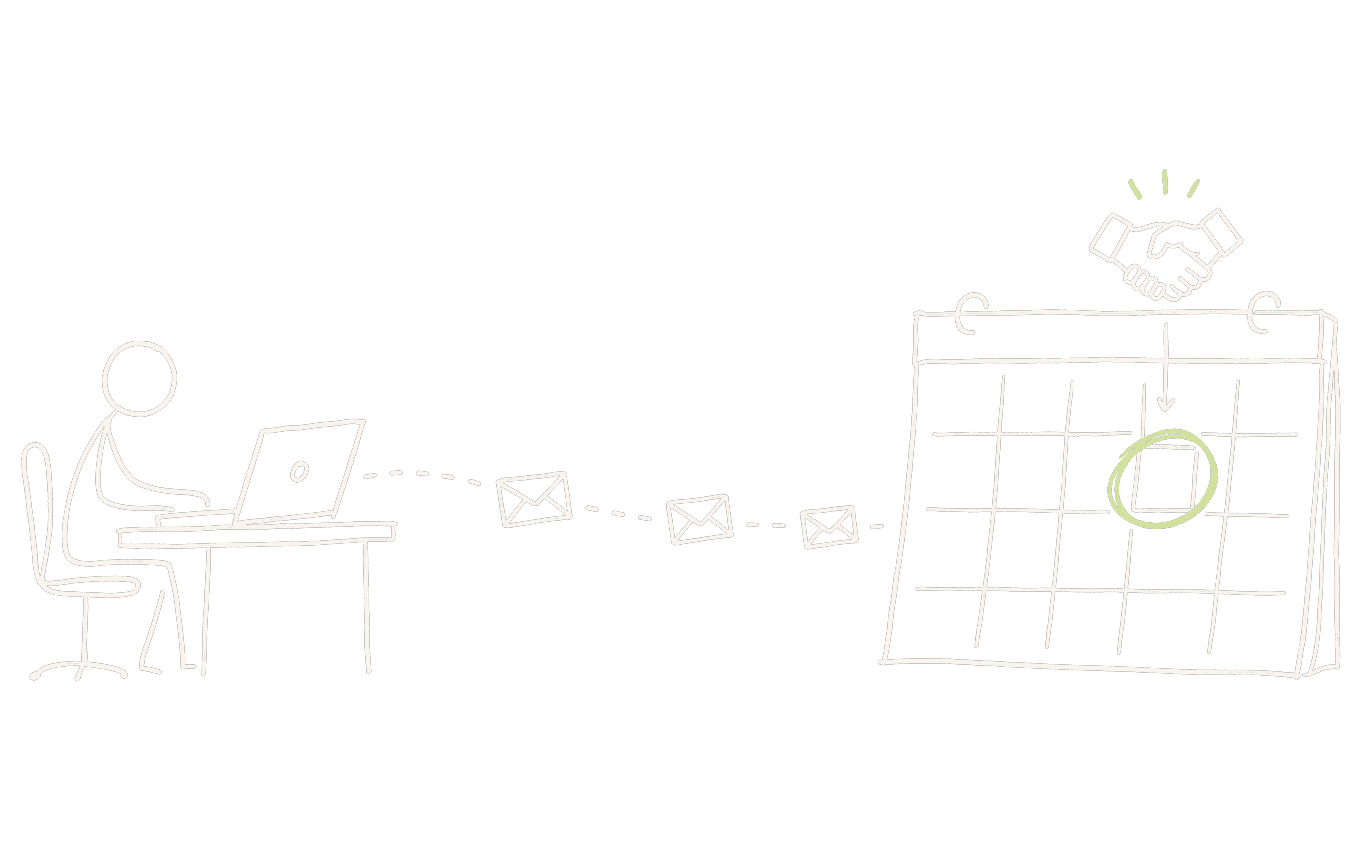
Appointment setting on X means using direct messages to start conversations with qualified buyers and turning the good ones into booked calls for a closer or founder. The playbook is short. Build a small list from people already showing intent, open with a message about them, and follow up two or three times. Qualify inside the thread, then drop a booking link and hand off with notes. Track calls booked, not messages sent.
This guide is for setters and agencies doing B2B appointment setting from X DMs. It goes through the process step by step, covering what practitioners on Reddit say works and where X's own rules draw the line.
What appointment setting on X looks like
Appointment setting splits the sales job in two. The setter prospects, opens and qualifies, and the closer runs the call. The split works the same way on phones, email or DMs.
On X, only the channel changes. People post their problems in public, profiles show what they do, and DM inboxes are far less crowded than email. u/Basic-Plankton3537 on r/SaaS, a founder who moved from cold email to X DMs, wrote that email "had completely died on me - I was getting maybe 1-2% on a good day. But X DMs? People actually read them. The inbox isn't saturated yet." That founder went on to build a DM tool, so read it as one interested operator's experience, not a benchmark.
X is also stricter than email about unsolicited messages. Its automation rules say you may not send unsolicited DMs "in a bulk or automated manner." Good appointment setting works within that: fewer, better conversations, and a reason behind each one.
Step 1: build the list from intent, not size
A setter's list decides the result before a single DM goes out. Five hundred people who share one clear problem beat five thousand who vaguely fit.
The best sources on X, from warmest to coldest:
- People asking for help. A post like "can anyone recommend a tool for…" is a public buying signal.
- People replying to a relevant post, whether it's yours, a competitor's or one from a big account in the niche.
- Followers of a competitor or an adjacent tool, filtered by bio.
- Members of curated X Lists in the niche.
Search with the words buyers use. Vendors describe the category differently. An operator who monitors X for leads, u/New_Grape7181, found that "most people don't use the exact product category when they're complaining," so phrases like "spent 3 hours manually..." "ended up working better than searching for our product category directly."
Before anyone goes on the list, remove accounts that can't receive DMs and anyone already on your do-not-contact list.
Step 2: write an opener that gets a reply
An appointment setter's DM opener has one job, which is getting a reply. It isn't there to book the call or make the pitch.
The structure that works is three short lines: something specific about them, one line on why you are writing, and one small question. Most openers fail by doing the reverse. Critiquing a setter's copy in r/b2bmarketing, u/CarstenBuilder summed it up: "It is way too long It is to much about you."
Two openers to adapt:
Saw your post about onboarding calls eating your week. We help B2B founders hand those off without losing the personal touch. Is that still a headache, or did you solve it?
Your thread on outbound for dev tools was sharp, especially the point about technical buyers ignoring email. Quick one: are you booking demos from X right now, or mostly inbound?
Leave out the link, the calendar and the paragraph about your agency in the first message. Our guide to cold DMs that get replies has more templates and covers the mistakes that kill reply rates.
Step 3: follow up two or three times, then stop
Most booked calls come from a follow-up, not the opener. In a thread about a setter with 1,500 messages and almost no calls, u/New_Grape7181 told them: "Most replies come on follow-up 2 or 3, not the first touch. I'd set up a simple sequence even for non-responders." An agency commenter, u/-TaskForge-, said the same: "we have a lot of conversations with people and even meetings booked from people who reply to our second or third follow up."
Here is a sequence that still reads like a person sent it:
- Day 0: the opener.
- Day 3: a short bump that adds something, like a relevant example or a sharper question.
- Day 7: a last message that makes saying no easy: "Not a priority right now? No worries, I'll leave it here."
Two rules don't bend. Stop every follow-up the moment the lead replies, so no setter walks into a thread where a scheduled message has already gone out twice. And never send a fourth follow-up.
Step 4: qualify in the thread
In B2B appointment setting, qualification decides whether the work pays off. A call booked with the wrong person wastes an hour of the closer's time and drags down your show rate.
Qualify lightly, in conversation, before you send the link. Three questions usually cover it:
- To check the problem: "How are you handling that today?"
- To check fit: "Is this for you, or are you looking at it for a team?"
- To check timing: "Is this something you'd want to fix this quarter, or later?"
If the answers fit, offer the call. If they don't, be useful and leave the door open. Someone who says a polite "not right now" today can be a warm lead in three months. If they ask not to be contacted, they go on your do-not-contact list.
Step 5: drop the booking link and hand off
Send the booking link only after the lead has said yes to a call. Then keep the handoff clean:
- Send the link with one line on what the call covers and how long it takes.
- Write handoff notes for the closer: the source list, what the lead said, and their answers to the qualifying questions.
- Confirm the booking in the thread and send a short reminder before the call. The setter owns the show rate too.
In XAutoDM, your scheduling link lives in a
{booking_link}Step 6: track it like a pipeline
Your inbox won't work as a pipeline. Give every lead a stage: contacted, replied, qualified, booked, showed, or not interested. Tag each lead with the source list and the opener it received, so you can see which lists and messages produce calls.
Track three metrics, in this order: calls booked, show rate, and calls booked per list. Messages sent is a cost. It doesn't tell you whether anything worked. Our Twitter CRM guide covers the stages and how to track replies without losing threads.
B2B appointment setting on X for agencies
Agencies running appointment setting for several clients hit capacity limits fast, because each X account can only send so much safely. X publishes a technical ceiling of 500 DMs a day per account, and real safe numbers sit far below it.
You scale by adding accounts instead of pushing each one harder. Each client's outreach runs from accounts that represent that client, and each account keeps its own pace. Replies roll into one pipeline per client. Anyone who says no goes on a shared do-not-contact list, so no other account messages them again. The agencies page shows how that looks in practice.
The case against cold DM appointment setting
The strongest objection is that cold DMs on X are spam by definition, and X's rules mostly agree. Beyond the automation rules, X's authenticity policy lists bulk, high-volume unsolicited DMs as content spam. In r/SaaS, u/New_Grape7181 advised against giving any tool access for auto-DMs, arguing that manual outreach gets better responses "when people can tell it's actually you."
That holds for blasting, and partly for tools. Good appointment setting works the other way: small lists of people with a visible reason to talk, messages written for each of them, and a stop as soon as they reply or say no. Some operators deliberately slow down. The same commenter described elsewhere adding a 2-4 hour delay to replies, because instant ones "can come across as automated." If you automate anything, automate list building, scheduling and tracking. Keep the pace human, and treat any account risk as real.
Run the playbook in XAutoDM
XAutoDM paces and personalizes your X cold DMs so they reach the inbox, follows up automatically until someone replies, and tracks each conversation through to a booked call. You can build lists from competitor followers, repliers, keyword searches or X Lists, then filter to people who can receive DMs and merge in your booking link. Replies land in a Reply Tracker that counts calls booked. See the appointment setting page, then create a free account to explore the app. Scraping and sending need a paid plan, from $29/mo per connected X account.
Frequently asked questions
What is appointment setting?
Appointment setting is outbound prospecting with one goal: booking a qualified meeting for someone else to run, usually a closer or the founder. The setter finds prospects, opens conversations, does light qualification and hands over a calendar booking with notes. On X, all of that happens in DMs instead of on the phone or in email.
Does appointment setting work on X?
It works where buyers are active on X and reachable by DM. That means founders, marketers, agencies, creators and crypto teams more than enterprise procurement. Small, relevant lists and openers that sound like a person get the best results. X's automation rules prohibit unsolicited bulk automated DMs, so blasting large lists is risky and doesn't work anyway.
How many follow-ups should an appointment setter send?
Send two or three follow-ups after the opener, a few days apart, then stop. Practitioners on Reddit report that most replies come on the second or third touch, not the first. Stop following up the moment a lead replies, and put anyone who says no on a do-not-contact list.
What should an appointment setter track?
Track each lead's stage (contacted, replied, qualified, booked, showed, not interested), the source list it came from, which opener it got, and calls booked per account and per list. Calls booked and show rate matter more than messages sent or raw reply rate, because those are what the closer and the client pay for.





Your next customer is already on X.
Find the people talking about what you sell, message them on a safe schedule, and turn the replies into booked calls.
- Scrape leads from any tweet, keyword or X List
- Auto-DM new followers and people who engage
- Follow-ups that stop the moment someone replies
- Safe daily limits and warm-up, built in
- Every reply tracked through to a booked call
Plans from $29/mo · cancel anytime.
Related posts


Ready to automate your Twitter DMs?
Start sending personalized DM campaigns to your target audience today. Get higher response rates and more leads than cold emails.