
Contents
Twitter has changed dramatically. Twitter users now seek alternative platforms because the platform features new rules coupled with updated ownership, alongside new platform updates.
People require Twitter alternatives that offer spaces with enhanced privacy, along with stronger communities or alternative feature sets according to individual preferences. Users can find different platforms that function similarly to Twitter, which offer their services to newcomers.
Users across social media platforms currently hold profiles on multiple services rather than selecting a single platform. Users benefit from this method since they can select and utilize Twitter app alternatives suited for different functions across their multiple audiences.
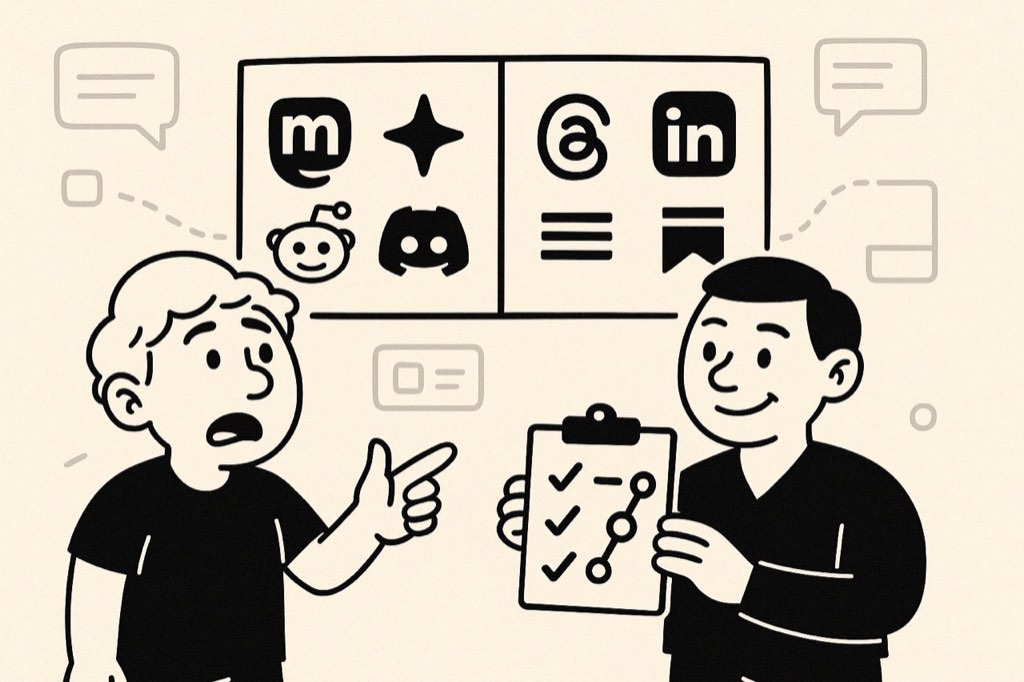
This guide examines eight emerging alternatives to Twitter that will gain increasing popularity during 2026. We will help you join the online community of your preference among these popular Twitter competitors.
1. Mastodon
Mastodon permits users to connect through 15+ million members who interact on numerous community-run servers that exceed the thousand mark. Server autonomy exists in Mastodon because each platform establishes its own rules through connections to the Fediverse network.
Pros:
- Community moderators create healthier conversations than algorithm-driven systems
- Posts appear in chronological order without mysterious filtering
- Users can transfer between servers while keeping their followers
Cons:
- Selecting the right server seems complicated for newcomers
- Lower user count means many popular personalities haven't joined yet
Many users dislike the manipulation of algorithms because they want to build authentic relationships through shared interests instead of haphazard viral popularity. The smart use of automation tools enables users to uphold their profile visibility on different Fediverse networks in a time-efficient manner.
2. Bluesky
Bluesky achieved more than 10 million user base in 2026 making it the most Twitter-like platform available among Twitter alternatives. Jack Dorsey supports this platform through his backing as Twitter co-founder, yet it maintains recognizable features and enhances primary aspects.
Pros:
- The design feels immediately recognizable to Twitter users
- Custom feed options allow for personalized timelines around specific topics
- Enhanced moderation tools developed from current social media lessons
Cons:
- Several essential features, like direct messages, arrived later than expected
- Fewer established creator monetization paths compared to mature platforms
Twitter enthusiasts who want a similar core experience but with improved moderation and reduced corporate influence. Consider social media scheduling tools to maintain regular posting as the platform continues growing.
3. Threads
Over 175 million people are using Meta's Twitter alternative through the shared user base between the Instagram and Facebook platforms. The user base of Threads gains from existing Meta platform users because it immediately connects with their Facebook and Instagram networks.
Pros:
- Instagram followers automatically see your Threads content
- Superior image and video integration compared to text-focused platforms
- An efficient notification system maintains conversation momentum
Cons:
- Content often moves quickly through feeds due to algorithmic decisions
- Privacy considerations mirror those found on other Meta services
Instagram content creators who desire to add text messages to their audience base seek Threads as an alternative platform. Users should develop synchronization methods that integrate content across different social platforms, resulting in effortless, continual brand coverage.
4. LinkedIn
LinkedIn now serves as a multi-purpose content platform thanks to its 930+ million professional users who share commercial insights and career progression developments, therefore making it a suitable Twitter alternative that focuses on work-oriented material.
Pros:
- Content reaches industry leaders and potential employers
- Posts remain visible for days or weeks instead of mere hours
- Responses tend toward thoughtful, constructive engagement
Cons:
- Professional tone expectations limit casual expression
- Basic accounts face restrictions when messaging non-connections
Industry leaders, together with business executives and thought leaders, seek to create professional authority instead of seeking casual relationships. Examine our step-by-step guide dedicated to helping you boost your LinkedIn profile exposure in the platform's network.
5. Reddit
Reddit connects more than 100,000 active communities (subreddits) to a user base totaling 57+ million daily members. Reddit arranges content discussions into distinct interest areas, which span popular interests to incredibly specialized fields that common social media networks usually ignore.
Pros:
- Communities focused on ultra-specific interests provide expert-level information
- Content quality improves through community voting rather than algorithmic promotion
- Anonymous participation option reduces social pressure and status-seeking
Cons:
- Each community has unique unwritten cultural norms that take time to understand
- New accounts face posting restrictions until they build karma through participation
- Interface can feel overwhelming compared to simpler alternatives to Twitter
People who want deep dives into specific interests rather than general social updates. Reddit rewards expertise and thoughtful contributions over personality or follower counts. Check out our guide on creating content for community platforms to maximize your impact.
6. Discord
Discord has evolved from a gaming chat platform to a comprehensive community hub with over 150 million monthly active users. Its server-based structure creates dedicated spaces where like-minded people gather around shared interests, from professional networking to creative hobbies.
Pros:
- Real-time voice, video, and text communication in one integrated platform
- Granular permission systems allow precise community management
- Robust bot ecosystem automates moderation and engagement tasks
Cons:
- Servers aren't publicly discoverable without direct links or invitations
- Features designed for community engagement rather than content discovery
- Managing notifications across multiple active servers becomes challenging
Community builders prioritize building authentic connections rather than content broadcasting. The platform specializes in developing continuous dialogue systems rather than focusing on single-time message posts. Studying automation for community management allows you to expand your reach while protecting your energy resources.
7. Substack
Substack combines email newsletters with social features, creating a hybrid platform where over 1 million paid subscribers support writers directly. Its Notes feature specifically targets Twitter users seeking thoughtful, longer conversations with fewer distractions.
Pros:
- Direct ownership of subscriber relationships, unlike algorithm-dependent platforms
- Multiple monetization options from free subscribers to premium memberships
- Content remains accessible and valuable long after publication
Cons:
- Building an initial audience requires more effort than follower-based networks
- Less immediate interaction compared to real-time Twitter alternatives
- Limited multimedia options compared to visual-first platforms
Writers, experts, and content creators who value deeper connections with fewer but more engaged followers. Substack rewards substance over virality. Explore our guide on integrating email with social strategies to build a sustainable audience.
8. Pillowfort
Pillowfort offers a unique blend of blogging and social networking for approximately 100,000 users. This platform prioritizes creative expression and privacy, allowing detailed content control that most alternatives to Twitter lack completely.
Pros:
- Granular privacy settings for each post, from public to specific user groups
- The reblogging system preserves original attribution better than most platforms
- Community structure balances personal expression with group interaction
Cons:
- Smaller user base limits potential audience reach and discovery
- Less frequent updates compared to larger Twitter competitors
- One-time registration fee ($5) creates an entry barrier for casual users
Creative professionals, artists, and writers who want control over who sees their content and how it's shared. Pillowfort emphasizes creating lasting content libraries rather than ephemeral posts. Visit our guide on content strategies across platform types to tailor your approach.
What people who actually switched report
The most useful advice on alternatives comes from people who already made the jump. In an r/Bluesky thread comparing platforms, u/bryansfsd, off X for over a year, made two points worth stealing:
"I would suggest you join all the alternatives (Bluesky, Threads, Mastodon, etc.) and determine which platform best fits you ... people will use their number of followers on X to justify why they stay there. However, when using the alternative platforms, I've quickly learned it's not the number of followers but the quality of interaction that matters most."
Both lessons apply to this list. There is no single "Twitter killer," there are different platforms that fit different niches, and the right move is to try a few rather than bet everything on one. And the follower count you are afraid to leave behind is often worth less than it feels, because engagement, not audience size, is what actually turns a platform into results. Pick for the quality of conversation, not the vanity number.
Conclusion
The perfect Twitter alternative depends entirely on what you valued most about Twitter itself. For instant news and updates, Bluesky or Threads might work best. For deeper communities, consider Mastodon or Discord. Professional networking thrives on LinkedIn, while content creators might prefer Substack or Reddit.
Most successful social media users maintain profiles across multiple sites, like Twitter, rather than seeking a single replacement.
FAQs
Which is the best overall alternative to X?
Bluesky offers the most similar experience to Twitter, while Mastodon provides better community controls and privacy. Your ideal choice depends on what you value most about Twitter.
Are Twitter alternatives safe to use?
Most alternatives to Twitter offer improved safety features compared to Twitter. Mastodon and Discord provide community-based moderation, while Bluesky and Threads have modern safety tools.
Can I import my Twitter following to these platforms?
Limited options exist. Mastodon and Bluesky allow importing Twitter follows who've already joined their platforms. Most require rebuilding your network gradually.
Which Twitter alternative has the most users?
Threads leads with 175+ million monthly users, followed by LinkedIn (930+ million profiles but fewer active users). Reddit has 57+ million daily active users.
How can I manage multiple apps like Twitter efficiently?
Use cross-posting tools like xAutoDM to publish content across multiple platforms simultaneously. Schedule posts, automate responses, and track engagement from a single dashboard.





Your next customer is already on X.
Find the people talking about what you sell, message them on a safe schedule, and turn the replies into booked calls.
- Scrape leads from any tweet, keyword or X List
- Auto-DM new followers and people who engage
- Follow-ups that stop the moment someone replies
- Safe daily limits and warm-up, built in
- Every reply tracked through to a booked call
Free Test plan · no credit card.
Related posts



Ready to automate your Twitter DMs?
Start sending personalized DM campaigns to your target audience today. Get higher response rates and more leads than cold emails.